1. Intuition and Initial Strokes (1983–84)

In this initial period, Elías Isgut approaches drawing and painting like someone opening an unknown door for the first time. His works from this period retain an exploratory freshness: quick lines, spontaneous gestures, and strokes that seem to search for their path on the paper. Color appears timidly, like a whisper that interrupts the whiteness of the support, still without imposing itself over the line.
Among these early pieces are the first Cabezas, human contours that function as inner maps, where thoughts and emotions seem to be compressed on the surface of the paper. More than portraits, they are sensitive diagrams: profiles open to the invisible, stretched between the precision of the stroke and the overflow of the subjective.
There is no intention of academic harmony or balanced composition; instead, each piece is an improvisation guided by curiosity and intuition. The energy of someone who, after years of logic and calculation, allows himself to experiment without fear of making mistakes can be felt in these works, letting the hand move faster than reason.
Visit Catalogit to see a larger collection of Elias Isgut’s artwork.
2. Explosion of Color and Formal Openness (1985-88)
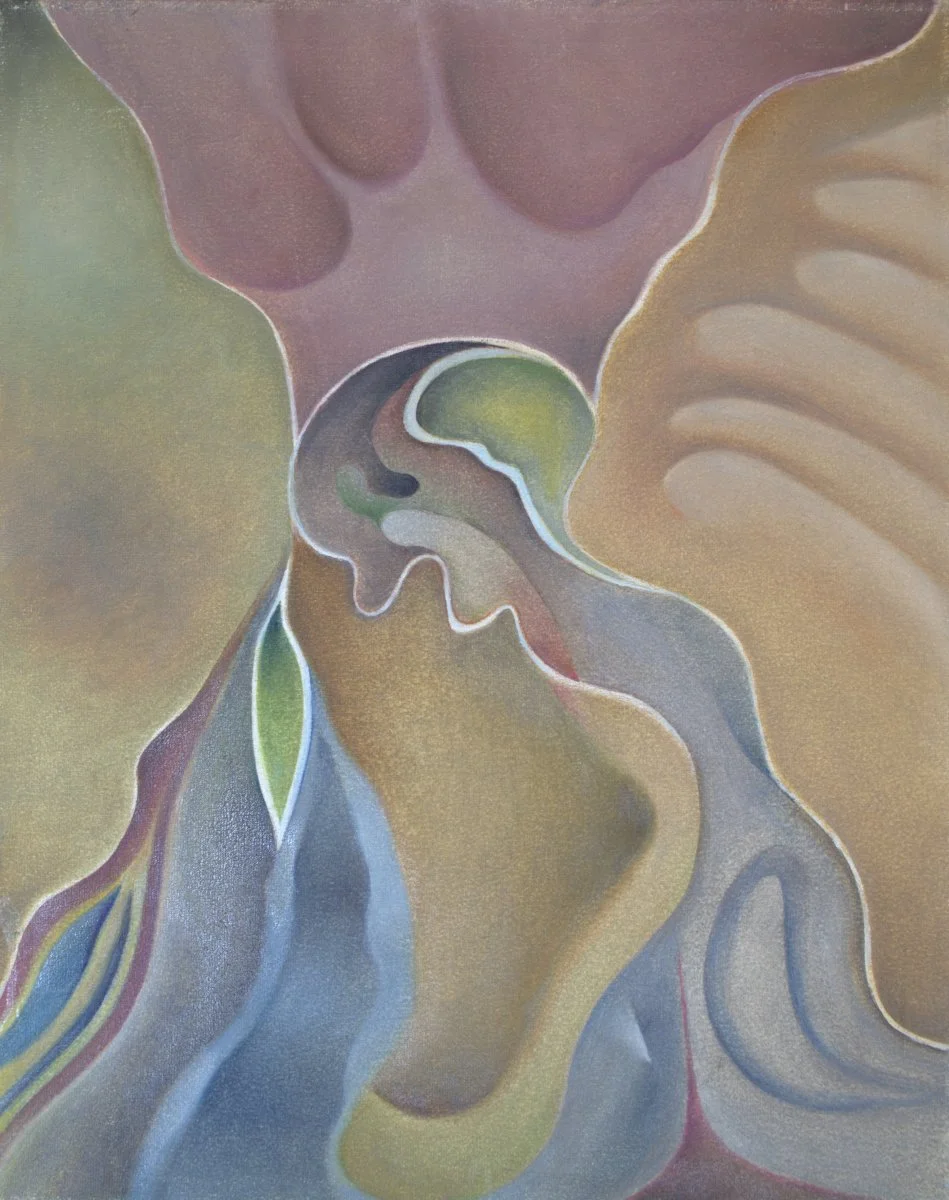
Color, which was previously an accent, here becomes the absolute protagonist. The palette broadens toward intense, even bold combinations, with contrasts that fill the space with vitality. Surfaces expand, and the line, though still present, takes on the role of a guide or contour for expansive stains, vibrant planes, and layered textures. The work becomes more gestural, freer, as if the artist had crossed a threshold that allows him to leave initial constraints behind. There is a clear intention of visual risk: strident colors, shapes that open and move, compositions that seem to push the boundaries of the paper or canvas. This is the stage of an expanding Isgut, fueled by the freedom to speak without asking permission.
A milestone in this journey was the Laberintos series of 1988, where geometric structures become metaphors for thought and memory. There, the precision of calculation coexists with the feeling of disorientation: plans, passages, and impossible pathways that, far from being mere formal exercises, evoke the difficulty of finding orientation in the inner life. These labyrinths make visible, perhaps more clearly than at any other time, how Isgut transferred engineering logic—the framework, the structure, the spatial design—into his work to transform it into an intimate language, charged with poetic resonances.
Visit Catalogit to see a larger collection of Elias Isgut’s artwork.
3. Expressive Maturity and Symbolism in Characters (1989-96)
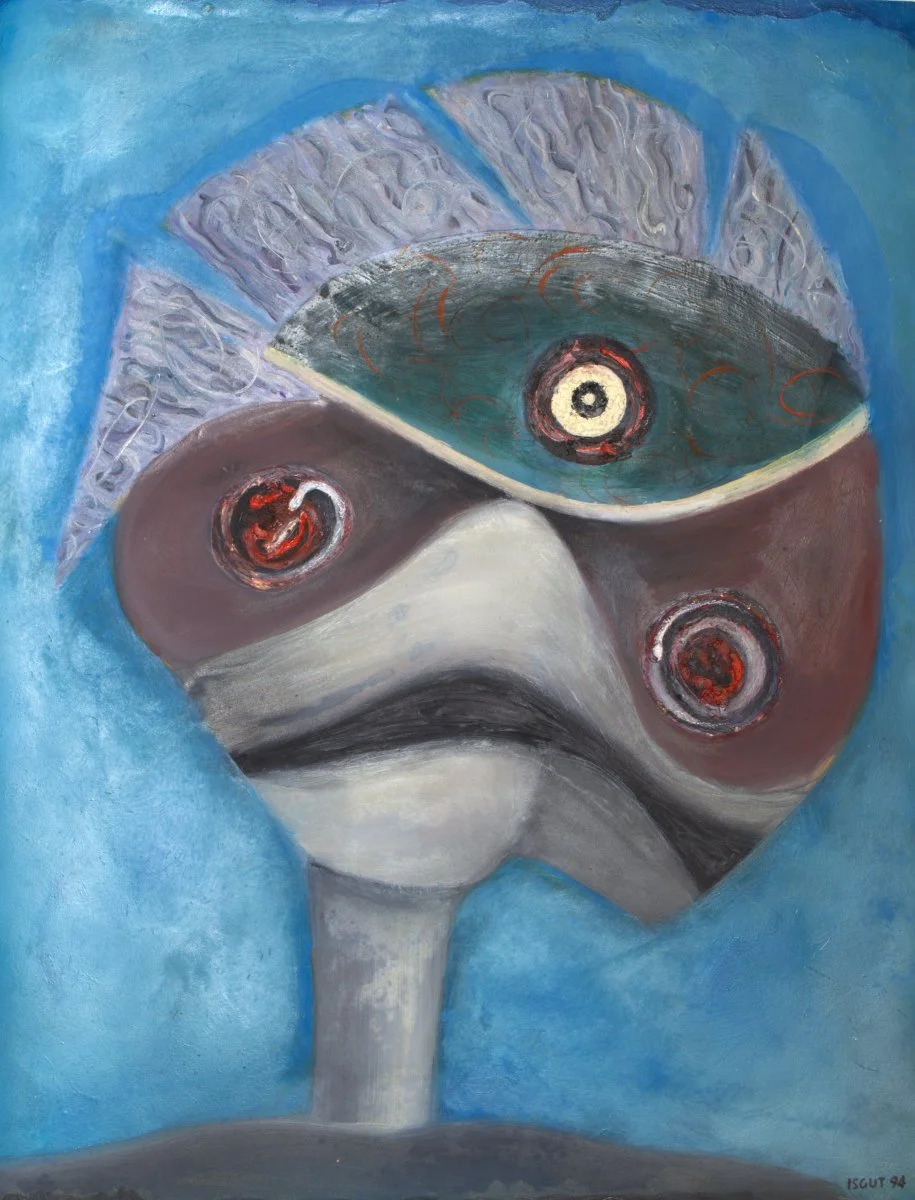
At this moment, the work incorporates a recognizable repertoire of figures and characters loaded with symbolism. Faces, silhouettes, and creatures appear that seem to inhabit a territory between the dreamlike and the archetypal. The compositions begin to contain small visual narratives: fragmentary scenes that evoke memories, personal stories, or echoes of collective memory, especially those of exile and identity.
The stroke maintains its freedom, but it combines it with greater spatial planning. The color remains vibrant, but now it engages in dialogue with symbolic intention: reds that suggest emotional intensity, blues that evoke distance or introspection, yellows that illuminate key areas of the composition. It is an Isgut who not only explores form but also begins to use it as a vehicle of meaning.
Visit Catalogit to see a larger collection of Elias Isgut’s artwork.
4. Internationalization and Consolidation (1997–2002)

After Isgut began to exhibit outside of Argentina, his contact with new audiences and artistic scenes broadened his perspective. The works from this stage reflect greater technical confidence and an almost choreographic mastery of formal elements.
He can move from dense and monumental compositions to more intimate pieces without losing expressive strength. The color becomes more refined: contrasts become more calculated, color transitions more subtle.
The presence of characters and symbols persists, but now they are integrated into more open scenes, where abstraction and figuration coexist without rigid hierarchies. It is also the moment when Isgut seems to feel most comfortable in his own visual voice, less concerned with external validations and more focused on the direct dialogue between his work and the viewer.
Visit Catalogit to see a larger collection of Elias Isgut’s artwork.
5. Final Stage: Synthesis and Intimate Humor (2003–11)
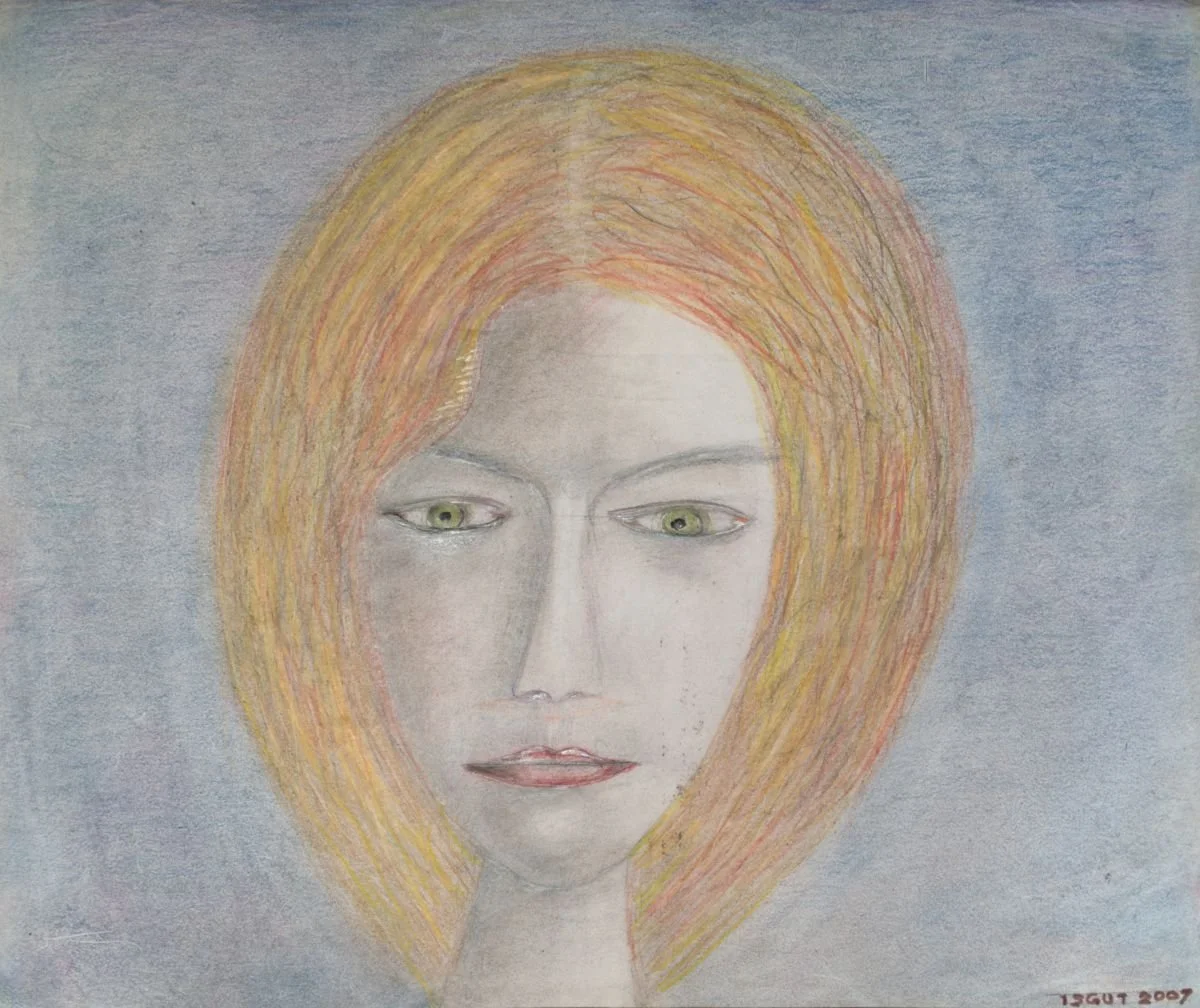
In his final years, Isgut condenses decades of exploration into a kind of lucid regression: a return to the essential, as if retracing paths to keep only what is indispensable. The figures are simplified, the colors refined until they become almost musical in their harmony, and the composition acquires a lightness that no longer needs to fill the space.
Each stroke, each stain, carries a specific weight. A subtle humor arises, sometimes ironic, which softens the symbolic load and allows access free of solemnity. At this stage, the artist is not trying to prove anything: he inhabits his own language, enjoys it, and shares it with the serenity of someone who, after many years of work, has found in refinement a form of fulfillment.
Visit Catalogit to see a larger collection of Elias Isgut’s artwork.